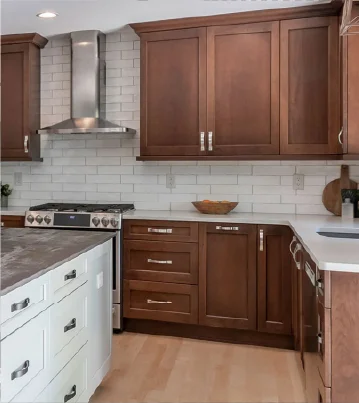


Why lighting and window design matter more than you'd think, and what the research actually says.
01 — IntroductionHow lighting and windows shape the way a room feels
The way you light your home affects how well you sleep, how productive you are during the day, and what a buyer will pay for the place when you sell it. The research on this is pretty one-sided. You already sense it, too — walk into a dim room with flat overhead lighting, then step into one flooded with morning sun, and you feel the difference in seconds.
That's because light works mostly below the level of conscious thought. It doesn't just help you see. It tells your body what time it is, regulates your hormones, shapes your mood, and determines how well you sleep that night. The windows that let light in, and the fixtures that simulate it after dark, are doing more biological work than most people give them credit for.
This article pulls together what the research actually says about lighting and window design, and why both matter more than most homeowners realize.
02 — BiologyHow natural light regulates your circadian rhythm
The human body is synchronized to the sun. Every cell carries its own internal clock, and those clocks are calibrated daily by light exposure, a system called the circadian rhythm. When light enters the eye in the morning, it suppresses melatonin (the sleep hormone) and triggers a cortisol spike that wakes the body up. When darkness comes, melatonin rises again and the body prepares for sleep.[1]
Modern indoor life has thrown this cycle off. According to the National Sleep Foundation's 2022 Sleep in America Poll, only 51% of Americans report exposure to bright light when indoors during the morning, and only 53% in the afternoon.[2] Roughly half of people are living in a state of chronic light deprivation during the hours their bodies need it most.
- Access to natural light is strongly associated with lower stress levels, better sleep quality and duration, increased alertness, and higher cognitive performance.[3]
- Disruptions in circadian rhythms are linked to metabolic syndrome, cardiovascular disease, obesity, depression, and impaired immune function.[4]
- Light therapy (structured exposure to bright light) can reduce symptoms of Seasonal Affective Disorder by up to 60%.[5]
A study using data from over 400,000 UK Biobank participants confirmed the link between daytime light exposure and improved mood, sleep quality, and circadian alignment.[6] The logic is straightforward: more light during the day means a stronger circadian rhythm, which means better sleep at night and better alertness during the day. And for most people, the home is where that exposure happens or doesn't. It starts with the windows.
03 — ScienceKelvin color temperature: warm vs. cool light at home
Not all light is the same, and the difference matters more than you'd think. Light color is measured in Kelvin (K), a scale that runs from warm amber tones at the low end to near-white daylight at the high end.
Cooler temperatures above 5,000K mimic natural daylight and help with concentration and alertness. Warmer temperatures below 3,000K create a relaxed, cozy atmosphere better suited for rest or winding down.[7]
→ Relaxation, wind-down, intimacy
→ Balanced, versatile, calm focus
→ Alertness, concentration, clarity
One nuance worth knowing: blue-enriched light in the 460-495nm wavelength range during the evening, particularly in the three hours before bedtime, is disruptive. A consensus paper in Frontiers in Photonics found that 90.6% of experts agreed this type of light suppresses melatonin, and 84.9% agreed it disrupts circadian rhythms.[8] If you have cool-white LEDs in your bedroom or living room, they're working against your sleep every night you leave them on.
"Perception depends on how a space is lighted. And perception, as they say, is reality."
— National Lighting Bureau
04 — ImpactHow bad lighting affects sleep, mood, and productivity
Poor lighting rarely announces itself. It chips away at your day in ways that are easy to blame on something else: tiredness you attribute to work, low mood you chalk up to stress, poor focus you blame on your phone. But the data points to the environment as a bigger factor than most people assume.
Sleep. A study of 1,762 adults found clear associations between morning sun exposure and sleep quality, sleep latency, and circadian alignment.[9] A window that lets in morning light does more for your sleep than most people realize.
Mood. A 2022 study in Building and Environment tested natural lighting improvements in residential spaces and found they directly affected residents' emotional wellbeing.[3] The mechanism involves serotonin regulation, which is heavily influenced by light exposure during waking hours.
Productivity. The Lighting Design Lab notes that 80-85% of our impressions of the world are visual, and that proper lighting affects performance both by changing how well we can see and by altering the operating state of the visual system itself.[10]
A concrete example: when Lockheed upgraded the lighting at an engineering facility, they saved $500,000 per year in energy costs and saw a 15% increase in productivity and a 15% decrease in absenteeism.[10]
Long-term health. A 2024 biophilic design study tracked workers over 12 and 24 months. Productivity gains held at 12.98% at 12 months and 9.17% at 24 months. This wasn't a novelty effect that faded; the improvement stuck.[11]
05 — WindowsWhy window design matters for daylight and energy
Lighting design is about what you put in a room. Window design is about what you let in. And the research here goes well beyond aesthetics.
One study found that employees with windows in their offices received 173% more white light during work hours than those without windows.[5] That's not a marginal difference. The same applies to homes, where the size, placement, and orientation of windows determines the quality of light you live in every day.
Window design shapes the home in three ways:
-
1Biological quality of light Natural daylight is full-spectrum and shifts in color temperature across the day, warm in the morning, bright and neutral at midday. No artificial light source fully replicates this. Large, well-oriented windows bring that dynamic quality indoors.
-
2Sense of space Big windows that blur the line between indoors and outdoors make rooms feel larger and more open. There's a reason they keep showing up in modern home design.[12]
-
3Energy performance High-quality, energy-efficient windows act as a thermal barrier, minimizing heat transfer. The U.S. Department of Energy reports that energy-efficient windows can save homeowners up to 30% on their energy bills.[13]
06 — DataWindow replacement ROI and home value data
There's a real financial case here too.
Home value. Zillow research found that homes with ample natural light sell faster and at higher prices.[12] According to the National Association of Realtors, homeowners typically recoup 70-80% of the cost of window replacement at resale.[14] In competitive markets, the effect is stronger: one documented case showed a 15% increase in selling price after replacing outdated windows with energy-efficient models.[14]
Time on market. Homes with new windows tend to sell faster and draw more competitive offers.[15] New windows signal to buyers that the home has been maintained and that they won't face surprise replacement costs.
Energy savings. The 30% reduction in energy bills cited by the Department of Energy[13] compounds over years of ownership. Window upgrades are one of the few home improvements that pay back both monthly (through lower bills) and at resale.
07 — Practice5 practical home lighting tips from the research
A handful of practical takeaways from the research, and none of them require a renovation.
-
1Orient windows to the morning sun East-facing windows capture morning light, which is the most biologically valuable light of the day. A bedroom with an east window and a good blind gives you circadian alignment in the morning, and darkness when you need it.[9]
-
2Layer your lighting, don't flatten it A single overhead fixture creates a flat, institutional feel. The best-lit homes use multiple sources (floor lamps, wall sconces, pendant lights, under-cabinet strips) that can be adjusted for different activities and times of day.[16]
-
3
-
4
-
5Dim in the evening Reducing light intensity in the two hours before sleep makes a real difference for falling asleep and staying asleep.[2] Smart bulbs and dimmers cost very little and do a lot for sleep.
08 — ConclusionWhy home lighting is a long-term investment
Light isn't a finishing touch. It's the medium through which we experience space, and through which our bodies decide when to be alert and when to rest.
The research is consistent: natural light improves mood, focus, and sleep. Poor lighting degrades all three. Windows that maximize daylight pay off both biologically and financially. And lighting that follows the Kelvin scale (cool where you concentrate, warm where you unwind) works with your body instead of against it.
Most homes aren't set up this way. Most lighting decisions get made once at move-in and never revisited. The gap between what most homes have and what the research says works is large, but closing it doesn't require a renovation. It usually just takes some attention.
"Natural light is highly sought-after in real estate. It has the ability to uplift spirits and enhance productivity, and it helps to regulate our circadian rhythms."
— Kaufman by Design
When light meets glass, your home works better. And so do you.
References
- Huberman Lab. Light Exposure and Circadian Rhythm. hubermanlab.com. Accessed March 2026.
- National Sleep Foundation. Good Light, Bad Light, and Better Sleep — 2022 Sleep in America Poll. thensf.org.
- Morales-Bravo, J. & Navarrete-Hernandez, P. (2022). Enlightening wellbeing in the home: The impact of natural light design on perceived happiness and sadness in residential spaces. Building and Environment, 223, 109317.
- Sleep Foundation. Light and Sleep: Effects on Sleep Quality. sleepfoundation.org.
- AYO / Circadian Health. 7 Ways Circadian Light Transforms Your Body Rhythm and Sleep (citing Northwestern University study). goayo.com.
- Lyall, L.M. et al. (2022). Time spent in outdoor light is associated with mood, sleep, and circadian rhythm-related outcomes: A cross-sectional and longitudinal study in over 400,000 UK Biobank participants. PMC / PLoS Medicine. pmc.ncbi.nlm.nih.gov.
- WeLight / MCW. The Impact of Lighting on Productivity and Comfort in Interior Environments. welight.mcw.com.
- Moore-Ede, M. et al. (2023). Lights should support circadian rhythms: evidence-based scientific consensus. Frontiers in Photonics. frontiersin.org.
- Soares, C. et al. (2025). The role of sunlight in sleep regulation: analysis of morning, evening and late exposure. PMC. pmc.ncbi.nlm.nih.gov.
- Lighting Design Lab. Lighting & Productivity. lightingdesignlab.com. (Citing Lockheed case study, Solar Today, May/June 1994.)
- Cooper, R. et al. (2024). Impact of biophilic building design on worker health, wellbeing and productivity — The Enterprise Centre. Journal of Environmental Psychology. sciencedirect.com.
- Taylors Windows. The Impact of Windows on Your Home's Value: A Detailed Analysis. taylorswindows.com. (Citing Zillow research.)
- U.S. Department of Energy. Cited in: AWP Windows. The Impact of Window Replacement on Property Value. awpwindows.com.
- National Association of Realtors. Cited in: AWP Windows. The Impact of Window Replacement on Property Value. awpwindows.com.
- American Quality Remodeling. Do New Windows Increase Home Value? ROI Breakdown Inside. americanqualityremodeling.com.
- Kaufman by Design. How Lighting Impacts Mood and Productivity at Home. kaufmanlumber.com.